- AngelsRound
- Posts
- Polsia 🤖
Polsia 🤖
AI that runs your company

Inside The Issue
One person companies: AI agents are starting to replace entire teams across engineering, marketing, and operations
What’s changing: The cost of building and running a company is collapsing as AI moves from assistants to autonomous execution
Who’s Hiring: Google Ventures backed AI startups hiring across engineering, product, and GTM
Startup Pulse: Capital continues flowing into AI infrastructure, inference systems, and sovereign compute
Bonus Read: What Happens When AI Coding Switching Costs Go to Zero?
Spotlight
What if the next billion dollar company has one founder and no employees?
Quick Pitch: Polsia is building an autonomous operating system that helps founders run companies through AI driven execution across engineering, marketing, support, and operations through a self iterating multi agent system that runs entire business functions without human teams.

The Problem
High Operating Costs: Startups need large teams to manage engineering, marketing, and customer support.
Fragmented Tooling: Existing AI assistants help with specific tasks but do not close the loop across functions.
Scaling Limits: Human led operations require more headcount and complexity to scale.

Snapshot
Industry: Enterprise AI and autonomous operations
Headquarters: San Francisco, CA
Year Founded: 2025
Traction: Grew from a $100K to $10M run rate in about three months , with 8,698 active companies and zero employees
Founder Profiles
Ben Broca, Founder: Former GM at CloudKitchens under Travis Kalanick and previously co-founded Hutch before building Polsia as a solo founder powered by AI agents.
Funding
Current Round: Raised $30M (Seed/Series A)
Lead Investors: Sound Ventures
Other Backers: True Ventures, Offline Ventures, Adjacent, Tekton Ventures, Drysdale Ventures, Vaynerfund
Revenue Engine
Subscription Model: Companies pay $49 per month to deploy and operate AI agents across business functions.
Revenue Share: Polsia takes a 20% share of revenue generated by companies built on the platform.
Autonomous Execution: AI agents execute workflows across engineering, support, marketing, and operations.
What Users Love
AI agents manage multiple business functions with minimal human oversight.
Cross company memory turns learnings from one company into system wide improvements.
Human in the loop approval thresholds support for high stakes actions such as large ad spend or final code merges.
LLM agnostic routing supports flexibility across model providers.

Playing Field
Autonomous Code Agents (Devin, Cursor Agent): Capable of resolving GitHub issues and scaffolding code, but limited to the development environment.
Enterprise Agentic Frameworks (Microsoft Agent Framework, CrewAI, LangChain): Flexible orchestration layers that require significant engineering effort to maintain.
Vertical AI Agents (eesel AI, Harvey): Strong performance within a single department but siloed from the rest of the business.
Polsia’s Edge: The platform acts as an AI CEO by connecting support, engineering, and marketing through shared cross company memory.
Why It Matters
AI adoption is shifting from conversational tools toward systems that independently execute workflows. As model capabilities improve, the idea of one founder operating an entire company is moving from theory into practice.

What Sets Them Apart
Errors caught in one company instantly update guardrails across all 8k+ companies.
A single prompt creates AI agents that plan, execute, and review entire workflows.
Agents monitor and improve the platform without human engineers.
LLM agnostic infrastructure reduces dependence on a single model provider.
Zero employees and strong early traction validate demand for autonomous company operations.
Analysis
Bulls Case 📈
Early traction suggests strong demand for autonomous operational systems.
Cross functional execution creates a broader platform opportunity than vertical AI agents.
Cross company memory may compound into a defensible workflow advantage.
The one founder plus AI model may reshape how companies are built and scaled.
Bears Case 📉
Autonomous systems running businesses create reliability and trust concerns.
Heavy dependence on external LLM providers may pressure margins and platform stability.
High early valuation and fundraising require continued rapid growth to justify the entry price.
Sole founder dependency creates operational continuity risk despite the platform’s self sustaining design.
Verdict
Polsia represents a shift from software as a productivity layer toward software as labor itself. The deeper change is not just automation. It is the collapsing cost of company creation as AI systems replace functions that previously required teams, capital, and operational expertise.
The larger question is whether autonomous systems can maintain quality, reliability, and trust as operational responsibility increases. If they can, the next wave of startups may look less like traditional companies and more like solo operators managing networks of AI agents operating at global scale.
Operator Notes
Founder Lens: The barrier to starting and operating a company is falling as AI agents replace functions that previously required teams, capital, and operational expertise.
Investor Lens: Investors may be able to see stronger traction and operational proof points earlier before committing significant capital to scale companies.
Who's Hiring — Google Ventures Portfolio Companies

GV has backed companies like Uber, Slack, Stripe, GitLab, Robinhood, and One Medical.
Many of its next generation AI portfolio companies are hiring aggressively across engineering, product, and GTM.
Harvey — AI platform for legal and professional services — hiring across SF, NYC, and remote
Hebbia — AI research platform for finance and legal workflows — hiring in NYC
Synthesia — AI video generation platform used by much of the Fortune 100 — hiring across London, NYC, and remote
Sierra — enterprise AI agents founded by former Salesforce leadership — hiring across SF and global offices
Attio — AI native CRM built for modern teams — hiring across London, NYC, and remote
Want To Evaluate A Startup Like An Investor?
We built a simple evaluation tool to help founders and emerging angels assess startup strength in few seconds.
Try it here. It’s completely Free!
The Startup Pulse
Another happening week in startup funding. Three signals from this week:
AI infrastructure is becoming physical infrastructure
Edge compute and inference layers continue pulling capital
Governments are now directly funding sovereign compute and quantum systems
Hark — Raised $700M Series A to build AI hardware and infrastructure systems as the race for compute expands beyond software.
Modal — Raised $355M Series C to scale cloud infrastructure optimized for AI workloads and inference.
Mercury — Secured $200M Series D led by TCV as AI native startups drive growing demand for modern financial infrastructure.
Attio - the AI CRM for modern businesses.
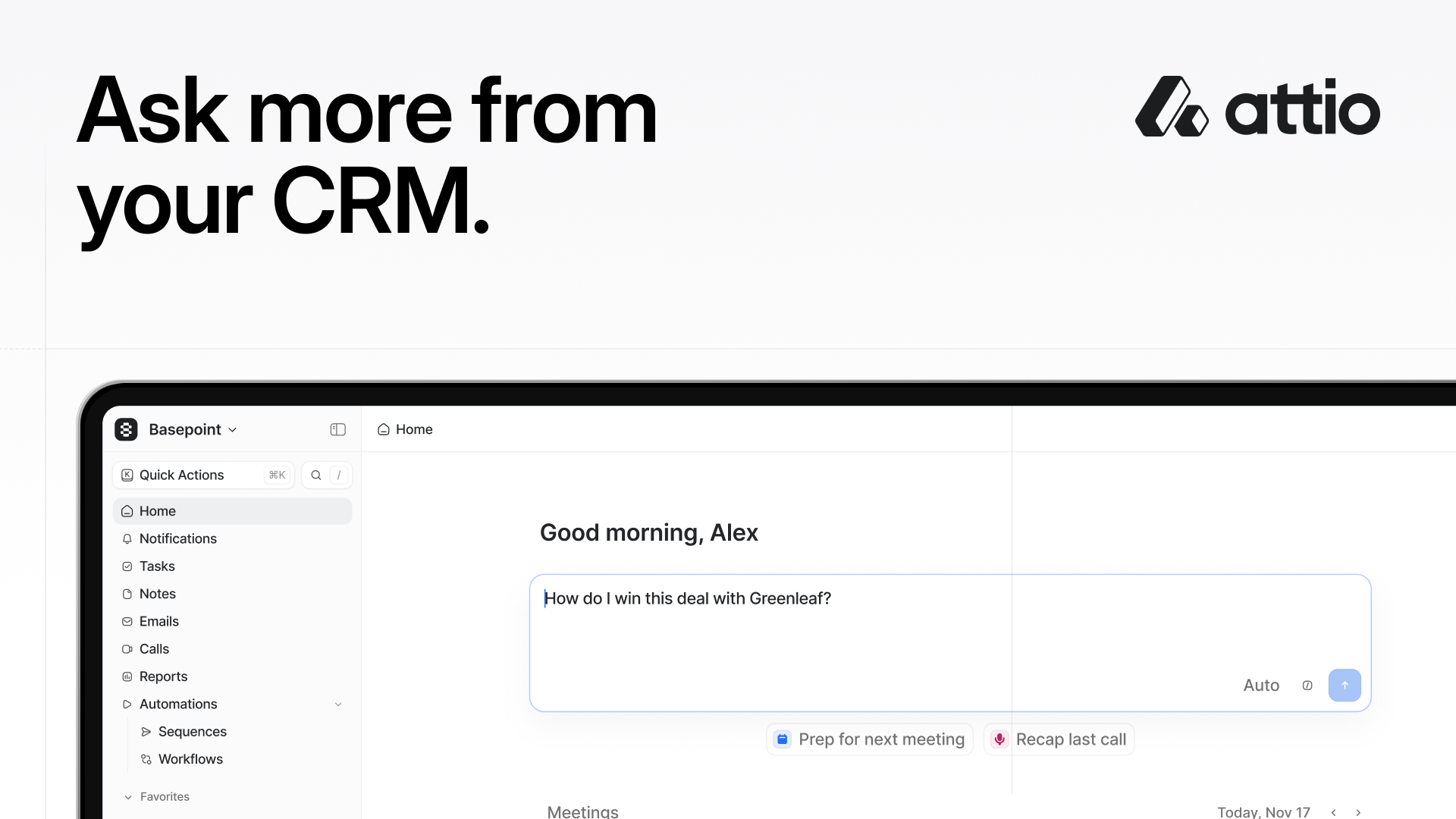
Attio is the AI CRM that keeps you ten steps ahead.
Ask Attio anything. Where should I focus? What deals are at risk? Search, update, and create across your customer data.
Ask more from CRM. Ask Attio.
Written by Ashher
